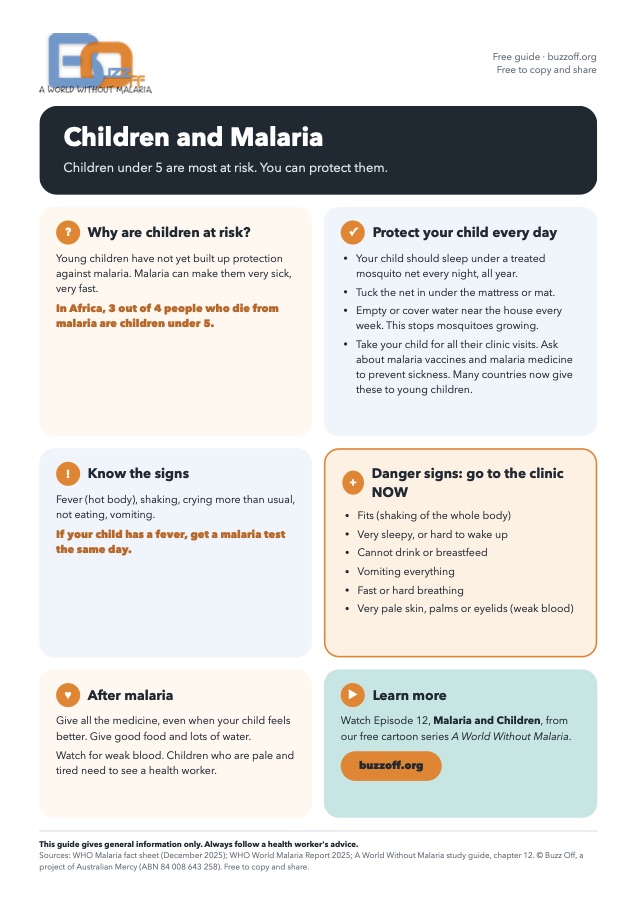
For many years, there was no vaccine for malaria. Now there are two malaria vaccines. They are called RTS,S and R21. The World Health Organization (WHO) says both are safe. They show promise, but they are still new and not yet fully proven. We do not yet know how well they will work over many years, or in every place.
Who gets the vaccine?
Young children who live in places with a lot of malaria. Children usually get 4 doses, starting at about 5 months old.
Where is it given?
More than 20 countries in Africa now give the malaria vaccine to young children as part of their normal vaccines. These programmes are still new.
Do malaria vaccines work?
The early results are hopeful, but they are not yet proven. In studies, children who got the vaccine had malaria less often, but many still got sick. The protection also gets weaker over time, and it works best with all 4 doses. Scientists are still watching how well the vaccines work in real life, over many years.
Is the vaccine enough on its own?
No. The vaccine may help, but it is not yet proven, and it does not stop every case of malaria. Children still need to:
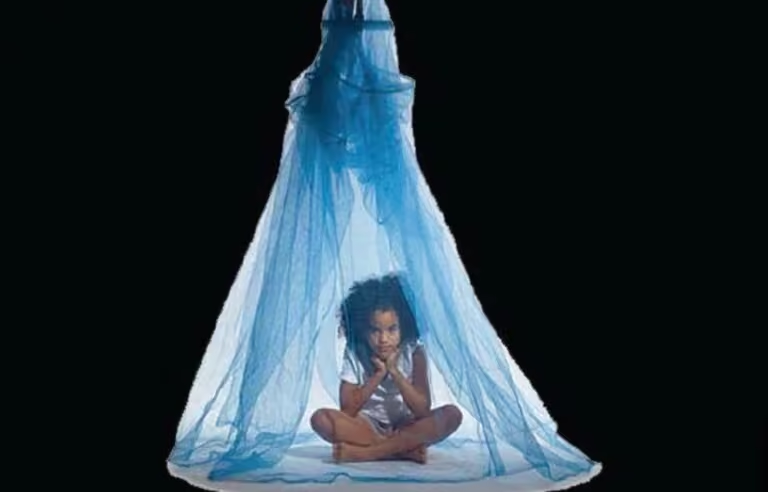
- sleep under a treated mosquito net every night
- get a malaria test for every fever
- get the right medicine quickly
What can you do?
If your country gives the vaccine, ask your health worker about it and follow their advice. But do not rely on the vaccine. Treated nets, a test for every fever and quick treatment are still the proven ways to stop malaria.
Watch: Episode 12, Malaria and Children → See the free series
Sources: WHO, malaria vaccines Q&A; WHO World Malaria Report 2025
This article gives general information only. Always follow a health worker’s advice.